

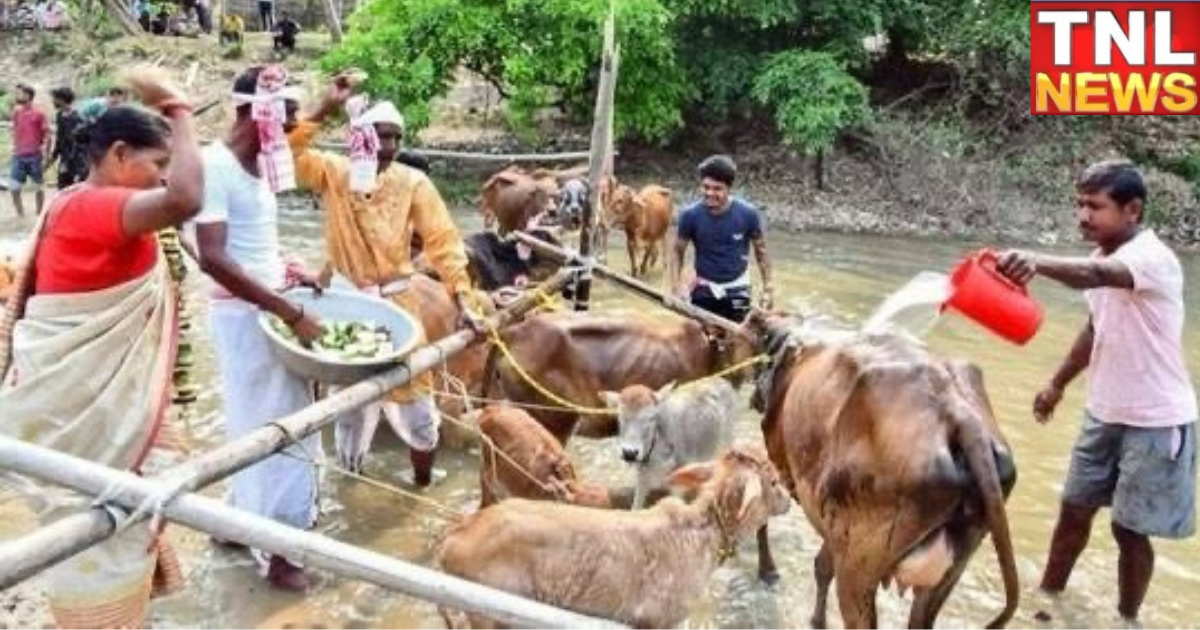
Goru Bihu was celebrated with great enthusiasm across Assam on Tuesday, marking the first day of Rongali Bihu and the beginning of the Assamese New Year. The occasion, deeply rooted in tradition, was observed with rituals dedicated to cattle, reflecting their importance in the state’s agrarian lifestyle.
From Majuli—the world’s largest inhabited river island—to various other parts of the state, people gathered to carry forward age-old customs. In Majuli, farmers began the day by taking their cattle to nearby rivers and water bodies, including the Brahmaputra, where the animals were bathed as part of traditional practices passed down through generations. The cattle were carefully cleaned and tended using natural methods, symbolising respect and gratitude for their role in farming.
As part of the rituals, farmers used leaves such as dighloti and makhiyoti to gently tap the cattle, a practice believed to ward off diseases and promote good health. After the bathing ceremony, the animals were fed vegetables like gourd and brinjal along with seasonal produce, symbolising prayers for their strength, longevity, and well-being.
Riverbanks in several villages turned into lively gathering spots, with communities coming together to perform rituals and celebrate the festival. The atmosphere was marked by joy, collective participation, and a strong sense of cultural unity. Following the rituals, villagers shared festive meals, formally ushering in the Bihu celebrations.
In some areas, tourists also took part in the festivities, experiencing the cultural vibrancy of the festival firsthand. A visitor from Chile shared that he had previously visited Assam and returned to once again witness Bihu celebrations along the riverbanks, describing the experience as warm, lively, and deeply rooted in tradition.
Visuals from Golaghat and other regions reflected similar scenes, with villagers enthusiastically participating in the rituals. Farmers were seen bathing and grooming their ploughing bulls and dairy cows, including indigenous breeds, as part of prayers for prosperity and good fortune in the year ahead.