

A day after the Narendra Modi government faced a rare setback in the Lok Sabha with the defeat of its Constitution (131st Amendment) Bill, the political debate over women’s reservation has intensified, with the Opposition attempting to take charge of the narrative.
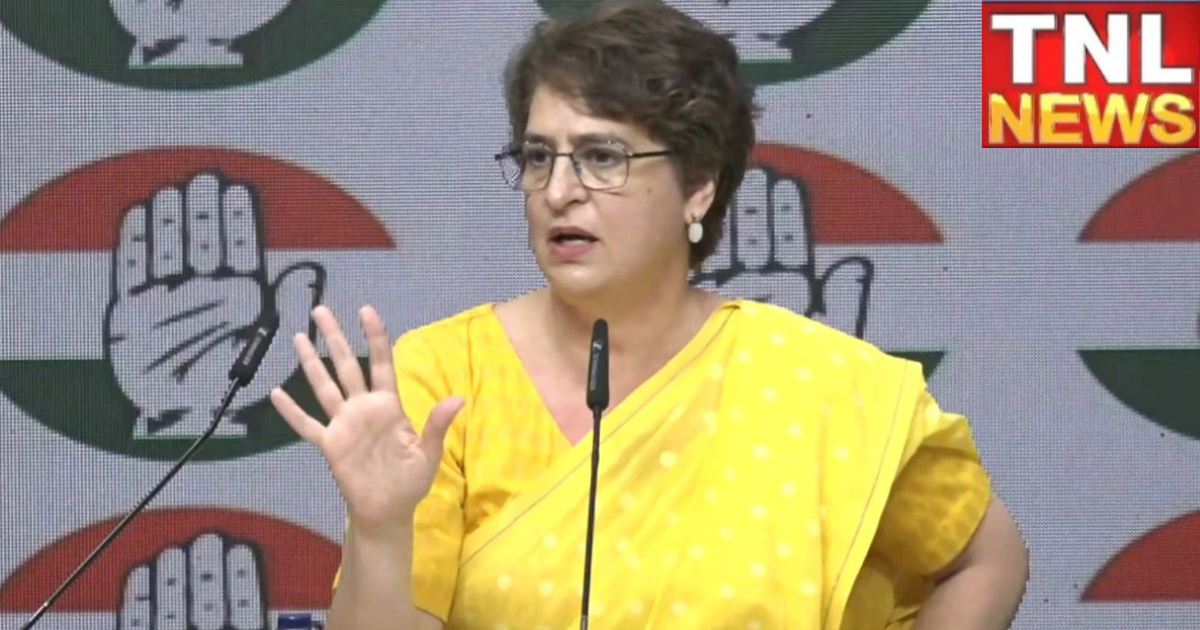
Priyanka Gandhi Vadra on Saturday directly challenged the government to reintroduce the earlier women’s reservation law passed in 2023 and implement it without delay. Speaking to reporters, she said the government should bring the old bill back to Parliament immediately and allow voting so that its intent becomes clear.
“If you really want to do something for women, bring back the bill that was passed unanimously in 2023. Pass it without delay and let women get their rights now,” she said, accusing the ruling BJP of trying to label Opposition parties as “anti-women” ahead of upcoming elections in states such as West Bengal and Tamil Nadu.
Focus on 2023 Women’s Reservation Law
The Opposition has referred to the Nari Shakti Vandan Adhiniyam (106th Constitutional Amendment Act, 2023), which provides 33% reservation for women in the Lok Sabha and state assemblies. While the law has already been passed and notified, its implementation is still pending.
The main disagreement concerns the conditions attached to it, particularly the requirement of a fresh census and delimitation exercise before it can be implemented. Opposition leaders argue that these conditions delay women’s political empowerment indefinitely.
Priyanka Gandhi and other INDIA bloc leaders have demanded that the government either remove the condition or amend the law to allow immediate implementation based on the current parliamentary strength.
Rahul Gandhi, speaking at an election rally in Tamil Nadu, also accused the government of embedding hidden political motives in the new proposal. He claimed the linkage with delimitation could reduce representation for southern and smaller states.
He reiterated that the Opposition blocked the new bill due to these concerns while reaffirming support for women’s reservation in principle.
Several Opposition parties, including the Dravida Munnetra Kazhagam (DMK) and All India Trinamool Congress (TMC), echoed similar concerns. The DMK proposed a separate constitutional amendment to implement 33% reservation immediately within the existing 543-seat Lok Sabha, without waiting for delimitation or census updates.
The TMC said it supports even higher reservation levels but strongly opposes linking the reform to delimitation based on outdated census data.
Government’s Stand
The BJP defended its position, arguing that the proposed system ensures fair expansion of seats while maintaining proportional representation across states. Union Home Minister Amit Shah accused the Opposition of blocking what he described as a historic reform.
He said increasing the size of the Lok Sabha would allow more seats for women without reducing representation for any state, including southern states like Tamil Nadu.
The government has not yet clarified why the 2023 law cannot be implemented by removing the census and delimitation conditions.
The INDIA bloc has announced plans to formally write to Prime Minister Narendra Modi, demanding immediate implementation of the original 2023 legislation. Opposition leaders reiterated that they support women’s reservation but oppose procedural delays.
Senior Congress leader Sonia Gandhi also thanked Opposition allies for maintaining unity during recent parliamentary discussions.
Broader Debate on Representation
The controversy has also reignited discussions on caste and representation. Several Opposition leaders pointed out that the current women’s reservation law does not include a specific quota for OBC women, a demand that has gained political momentum.
With the upcoming caste census expected to influence political equations, parties such as the Rashtriya Janata Dal (RJD) and the Samajwadi Party (SP) have called for reservation frameworks to be updated based on new demographic data.
As both sides remain firm in their positions, the women’s reservation issue has evolved into a wider political debate over federal balance, representation, and timing of implementation.
While the government maintains that its approach ensures structural fairness, the Opposition argues that delays are politically motivated and deny women immediate political representation.